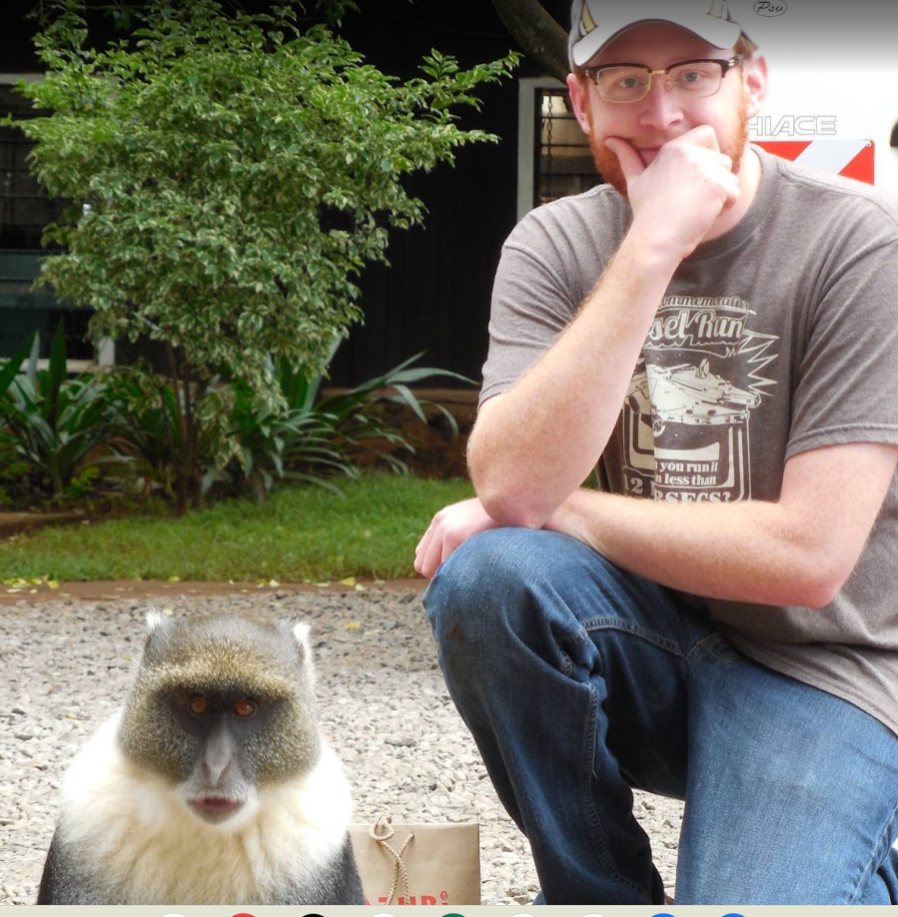
My first international trip was to Kenya, inspired in part by a summer internship in the education department of a zoo. That trip changed the way I looked at travel.
Since then, I have traveled largely to see wild animals in wild places. An elephant crossing the road in Kenya, monkeys moving through a forest in Costa Rica, or a sloth high in the canopy in Colombia is more interesting to me than any posed photograph. You are seeing an animal make its own choices in a place where it belongs.
That does not mean every experience marketed as wildlife tourism is ethical. Some of the people who love animals the most end up supporting harmful attractions because the problem is not always obvious from the outside.
What makes an animal encounter ethical?
For me, a good animal encounter starts with choice. A wild animal should be able to leave, hide, rest, eat, or ignore us. The guide sets a respectful distance, the group stays small enough to manage, and nobody has to change the animal's behavior to guarantee a sighting.
With wild animals, observation is almost always better than interaction. If an experience is built around touching, feeding, holding, riding, or taking a close-up selfie with wildlife, I start asking questions.
Why wildlife selfies can be harmful
Costa Rica launched its national Stop Animal Selfies campaign in 2019. It asked visitors to photograph wild animals from a safe distance instead of holding or feeding them.
The picture itself is not always the problem. I am more concerned about what had to happen to make it possible. A wild animal that wants nothing to do with people is not going to sit quietly while tourists pass it around.
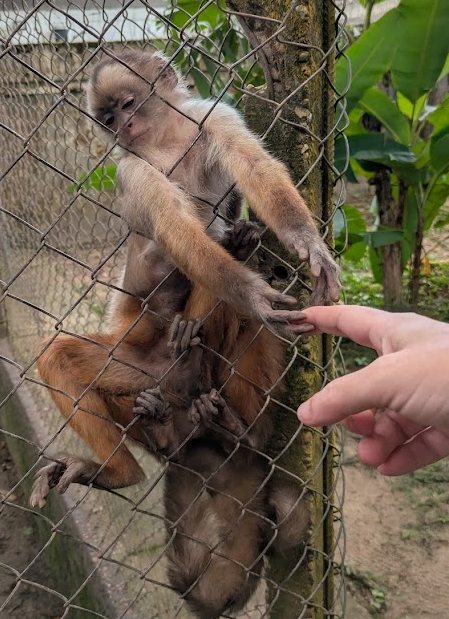
Wildlife handling can create several problems:
- Disease can move both ways. Close contact gives people and wildlife more opportunities to share pathogens.
- Tourist demand creates a market. When people pay to hold an animal, there is money to be made by capturing, breeding, or trading that species.
- Stress is easy to miss. An animal can look calm in a photograph while being frightened, restrained, or simply unable to get away.
- Taking animals from the wild affects more than one animal. It can disrupt social groups, reproduction, and the role that species plays in its ecosystem.
Wildlife tourism should give local communities a reason to protect animals where they live. It should not create a reason to remove them.
Wild animals and domestic animals are different
Not every animal encounter involves wildlife. Dogs, cats, horses, goats, cattle, and sheep have lived alongside people for thousands of years. Domestication changed their behavior and biology.
A domestic goat on a farm is very different from a wild mountain goat. The same distinction matters when comparing a horse carrying a rider with an elephant carrying one. Horses were domesticated, while elephants were not. An elephant may be accustomed to people or trained to carry them, but that is not the same thing.
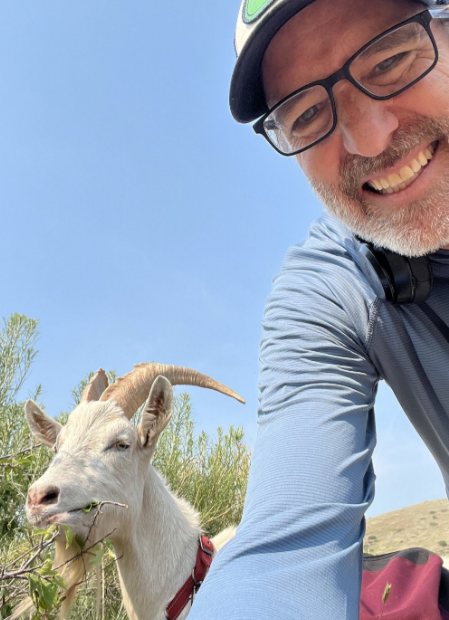
That does not mean anything goes with domestic animals. It means the questions are different. On our goat hikes, for example, the goats are walking freely, browsing, meeting people, and getting a form of enrichment. You can read more about why our goats hike with us.
For an experience with domestic animals, look for:
- Clean living conditions, shelter, shade, and room to move
- Regular veterinary care
- The ability to walk away, rest, browse, or opt out
- Work suited to that animal, with real breaks
- Handlers who notice what the animal is telling them
A tiger born in captivity is still a tiger. A macaw raised by people is still a wild species. Being comfortable around humans is not the same as being domesticated.
Questions to ask before booking an animal encounter
Before paying for a wildlife experience, ask:
- Is the animal wild or domestic?
- If it is wild, am I being asked to touch, feed, hold, or ride it?
- Can the animal leave if it wants to?
- Are there barriers between people and wildlife?
- Where did the animals come from?
- Does the experience change the animal's normal behavior?
- Can the operator name the conservation work or local partners it supports?
- What happens when tourists are not there?
For captive facilities, I also look at accreditation and the source of the animals. I put those questions in a separate guide to telling whether a zoo or sanctuary is ethical.
Wild animals do not owe us an experience
Sometimes you spend hours looking for something and see nothing. Sometimes the elephants disappear before you can take a photograph. Sometimes the sloth is too high in the tree, or the bird flies away before you can lift your camera.
That uncertainty is part of wildlife travel. For me, a good encounter is one where the animal's day would have gone much the same if we had never shown up. Maybe you get the photograph and maybe you don't, but the animal is still free to leave.