Most people probably associate artificial intelligence with newer tools like ChatGPT and AI-generated images, but the term was coined in 1956. Forms of AI and machine learning had already made their way into spell check, predictive text, spam filters, recommendation systems and facial recognition before many of us thought much about them.
For conservation, the way we use the technology matters. Sorting thousands of camera-trap photographs or identifying a bird call is very different from generating a video of an animal doing something that never happened. One can help us study wildlife. The other can give people a false idea of how wildlife behaves.
A Wildlife Encounter That Never Happened
I photographed this young long-tailed macaque in Sabah, Malaysian Borneo, in 2018. In the original photograph, the macaque is sitting alone on a fallen tree. For the second image, I asked AI to add a small bird to its hand. The macaque is real, but the interaction with the bird never happened.
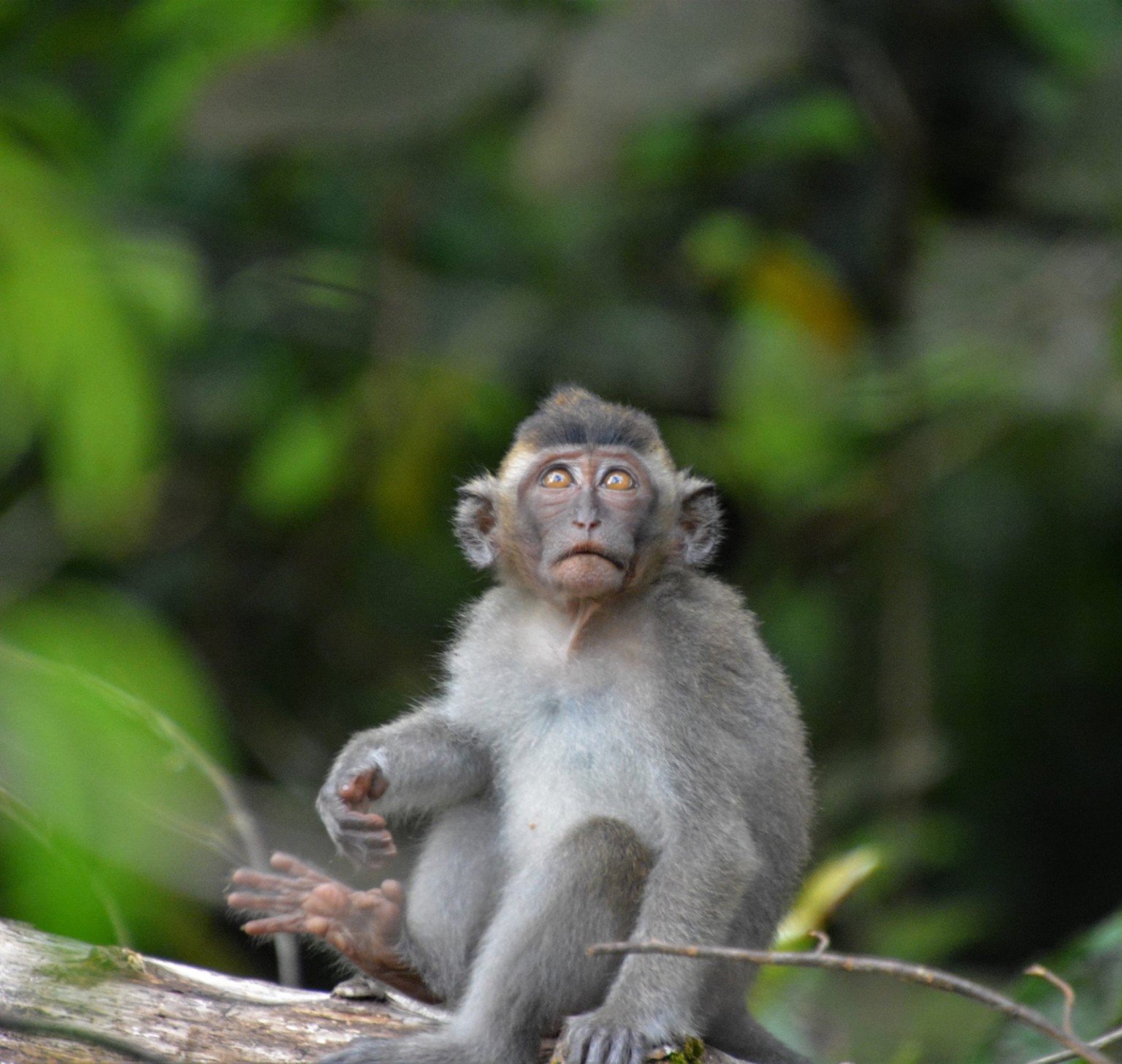
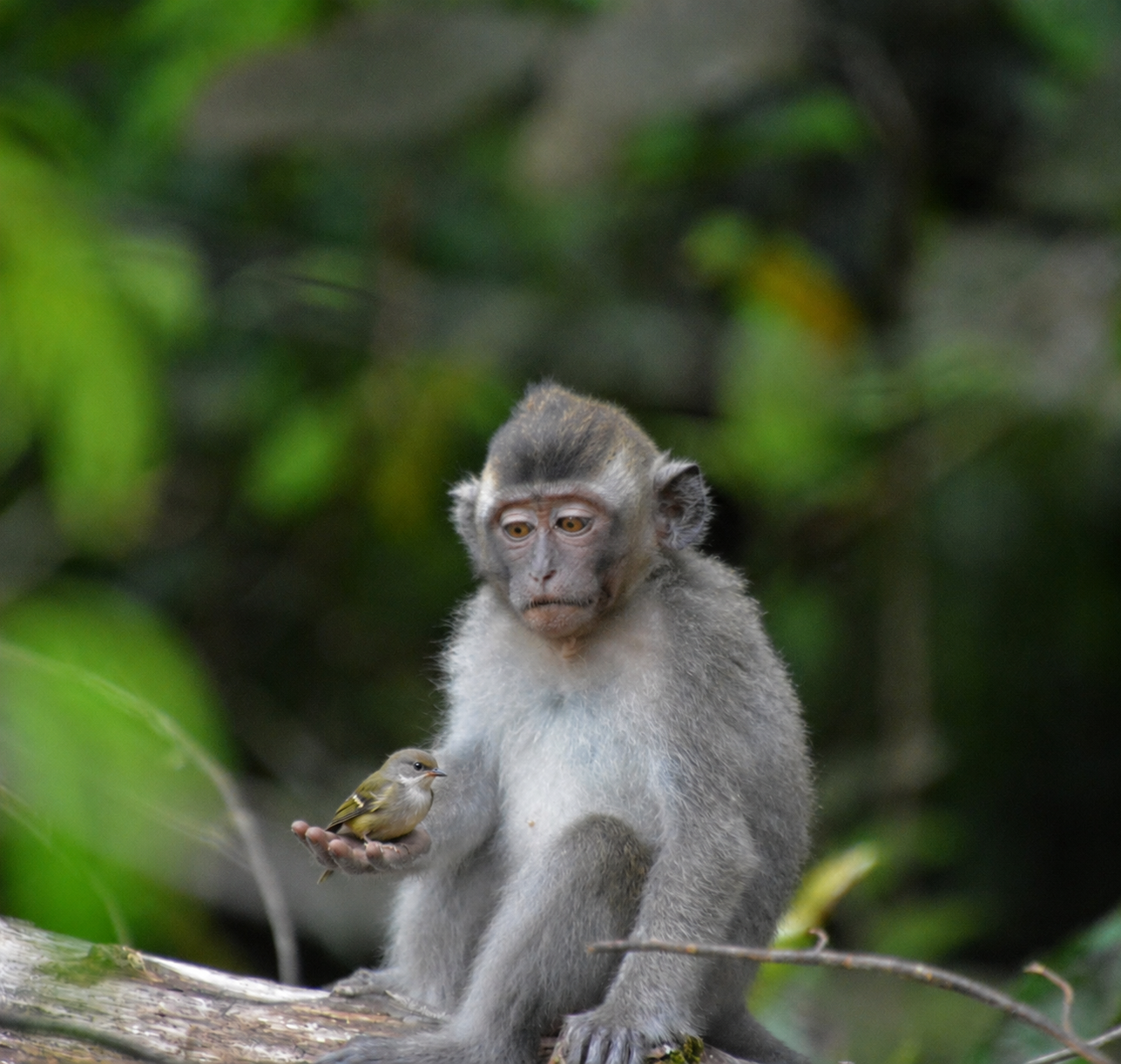
With a simple prompt, an ordinary wildlife photograph became more emotional and probably more shareable. The lighting looks believable, the bird fits into the scene, and even the macaque's expression seems to tell a story. That story is completely made up, but someone scrolling past the image would have no way to know that unless I told them.
AI Can Be a Valuable Conservation Tool
Camera traps can collect thousands of photographs, including plenty of empty trails, moving branches and blurry animals. Researchers still have to sort through those images and turn them into useful data. Wildlife Insights uses artificial intelligence to help identify animals in camera-trap photographs and process that information more efficiently.
AI can listen too. BirdNET uses machine learning to identify birds and other animals from sound recordings. Instead of requiring someone to manually listen to every hour of audio, researchers can use technology to help find the recordings that matter.
Some of these tools have also made their way onto our phones. Merlin Bird ID can help identify a bird by its song or photograph, while Seek by iNaturalist uses image recognition to identify plants, animals and fungi.
They aren't perfect, and an identification sometimes needs a second look. But they can get people to notice what's around them. You hear a bird you don't recognize, pull out your phone and suddenly you have a name for it. Maybe you look it up. Maybe the next time you hear that call, you recognize it without the app.
These tools are helping people learn more about wildlife that was already there, rather than inventing an encounter for them.
The Problem With Fake Wildlife Videos
My social media feeds are increasingly filled with animal rescues, unlikely friendships and perfectly timed wildlife encounters. Some are real, some are staged, and more appear to be completely generated. They are also getting harder to spot.
A fabricated video can show a wild animal asking a person for help, a predator protecting an animal it would normally hunt or two completely unrelated species becoming friends.
These stories are easy to share because we recognize human motives in them. The animal looks grateful, the predator appears compassionate, or the unlikely pair seem to be best friends. None of it has to have happened for the video to get an emotional response.
A 2025 paper published in Conservation Biology looked at this problem specifically, warning that AI-generated wildlife images and videos can distort the way people understand animals, biodiversity and ecological relationships. The concern goes beyond people simply being fooled by a fake video. If we see enough of this content, it can start changing our expectations of real animals. You can read the open-access paper here.
When Real Wildlife Has to Compete With AI
Real wildlife usually isn't perfectly timed. Sometimes you wait an hour and see nothing, or the animal is far away or partly hidden behind a branch. A river dolphin might surface for a second and disappear. A sloth can look like a dark blob high in a tree. A monkey might just sit there.
During my trip to the Colombian Amazon in 2025, I got incredibly lucky with one river dolphin photograph. The dolphin came far enough out of the water that I captured its tail, dorsal fin and pink underside. Most sightings looked nothing like that. Usually I saw a back, a fin or a quick splash before the animal disappeared beneath the water again.
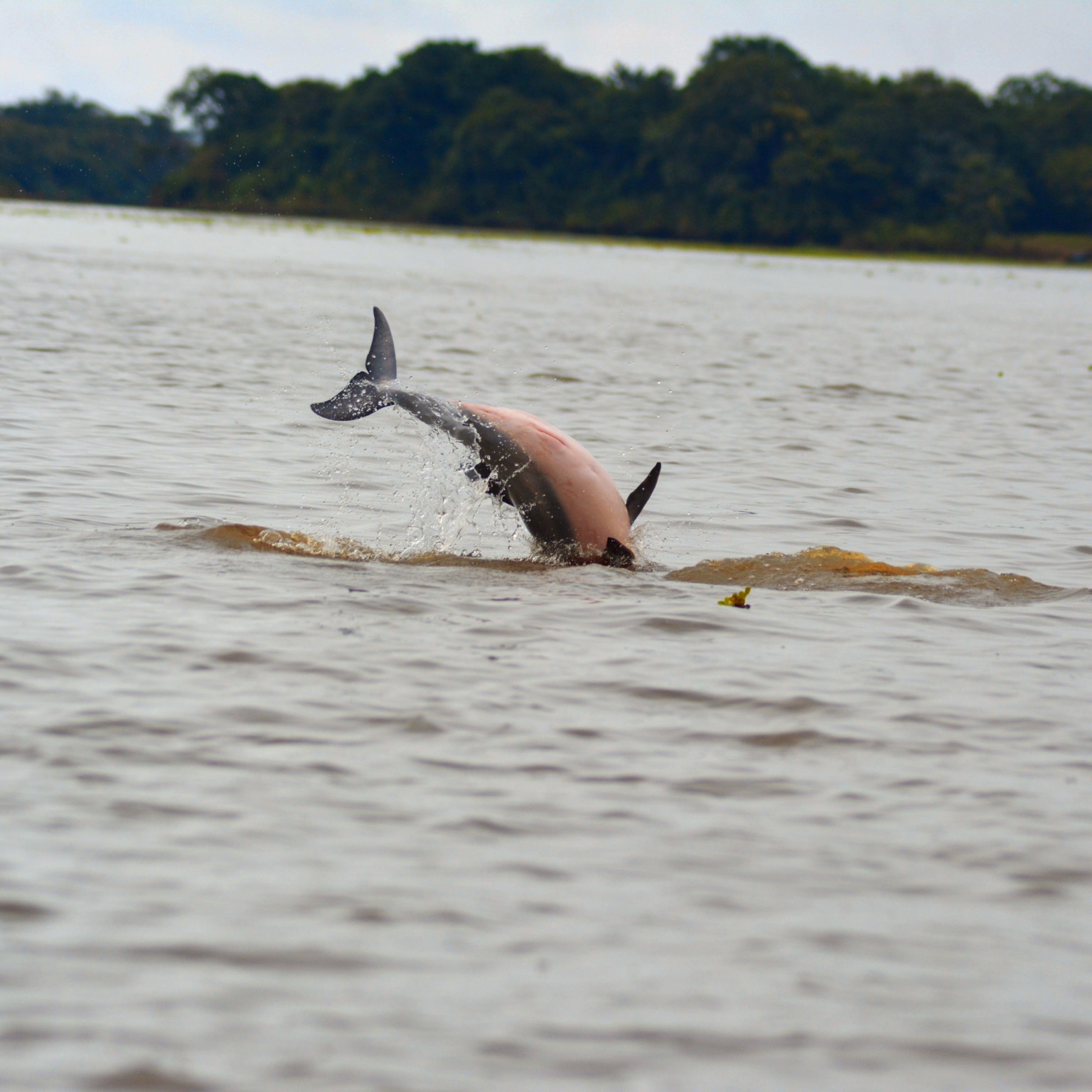
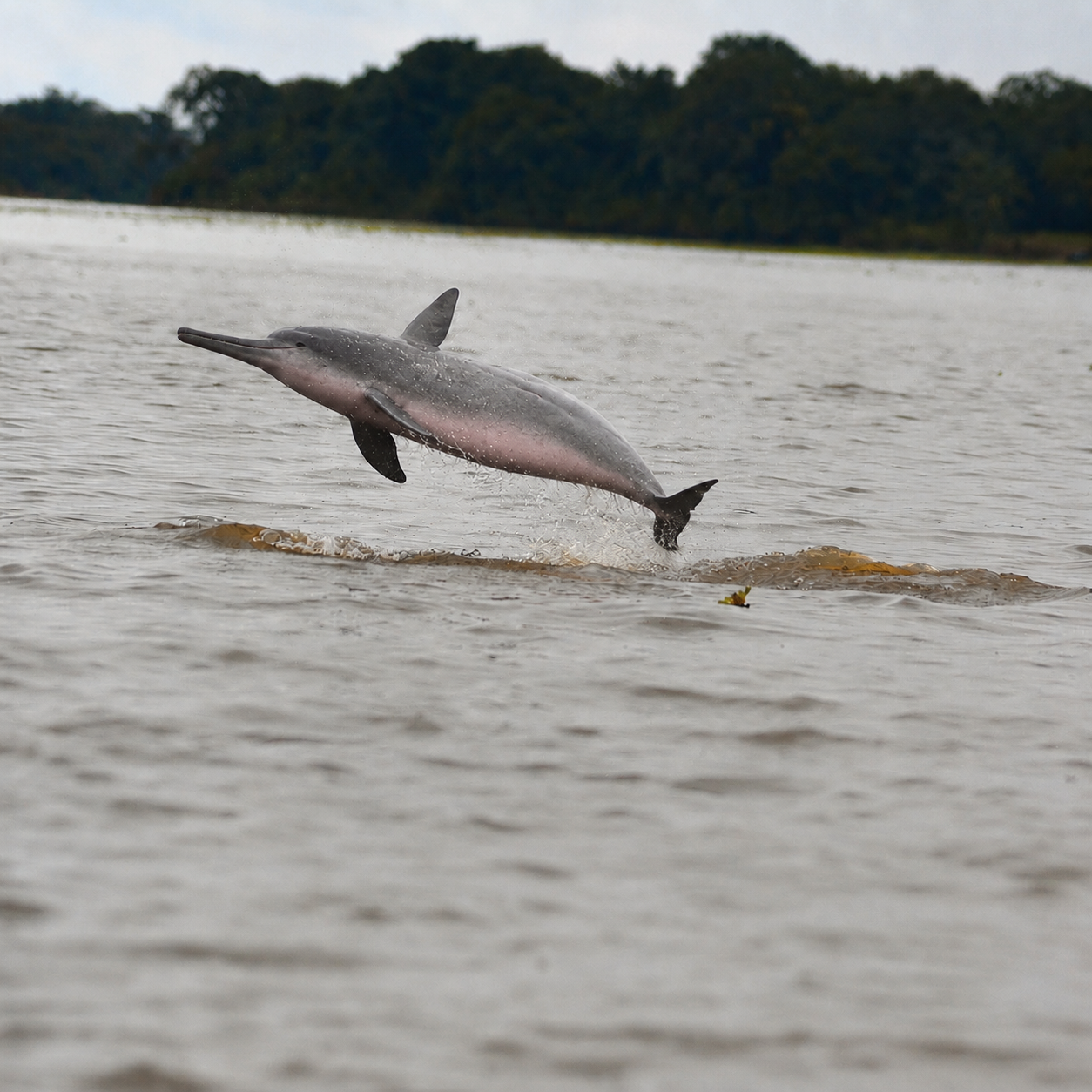
AI can give me something much more impressive in less than a minute. I asked for a bright pink river dolphin launching completely out of the Amazon in perfect light, and it gave me the kind of wildlife encounter most travelers would love to photograph. It is also an encounter I never had.
My real dolphin photograph was already unusually lucky. Put it next to a flawless AI-generated breach and suddenly the real encounter can look less impressive.
If our feeds are full of animals performing dramatic rescues, approaching people for help and forming unlikely friendships, a real animal simply behaving like a real animal has a lot to compete with.
After seeing enough of those images, people may begin to expect the same behavior from real wildlife.
False Behavior Can Have Real Consequences
Showing wildlife behaving in ways it does not actually behave can also make wild animals look safer, friendlier or more suited to life around people than they really are.
A fake video of a wild cat cuddling someone on a couch can make keeping an exotic animal seem harmless. A generated video of a monkey gently carrying another species can suggest a relationship that doesn't exist. A fake rescue can make approaching or handling a wild animal look like the right thing to do.
Even when the content looks positive, it can normalize close contact with wildlife or make wild animals look like pets. There are also practical problems when generated images are mistaken for documentation. Wildlife photographs and observations can have scientific value, and citizen-science projects rely on people recording what they actually see. Generated or heavily altered images mixed into those records could create false sightings or bad data.
The opposite can happen too. As fake wildlife becomes more convincing, genuinely rare photographs become easier to dismiss as AI.
Before You Share an Animal Video
You don't need to investigate every animal video that appears on your feed. But if something seems a little too perfect, it's worth looking twice.
Who originally posted it? Do they identify the animal or where it was filmed? Is the behavior unusually human-like? Does the animal move naturally? Is a photographer, researcher, park or wildlife organization credited? And if AI was used, does the person who posted it actually say so?
If something looks fake, I generally don't share it, even to point out that it's fake. Engagement can still help misleading content travel farther.
I'd rather follow photographers, researchers, parks, rehabilitation centers and conservation organizations that can tell me where their footage came from.
I use AI, and I think it has useful roles in conservation and education. I also think generated wildlife needs to be clearly labeled. Real animals are interesting without being made more dramatic, more human or easier to photograph than they actually are.